
Serviced accommodation opportunities are often presented using impressive nightly rates, occupancy levels and projected monthly revenue.
However, revenue is not the same as profit.
A property might generate several thousand pounds in bookings each month, but that does not mean the operator keeps all of it. Beyond the obvious expenses such as rent, utilities and cleaning, several smaller and less visible costs can gradually reduce the amount of profit left behind.
Individually, these expenses may not appear significant. Once combined across several properties and repeated every month, they can make a noticeable difference to the performance of a serviced accommodation business.
At Apex Stays, we have spent the past 12 months operating four serviced accommodation apartments in Bradford city centre through a challenging and price-sensitive market.
That experience has shown us that successfully running serviced accommodation involves much more than creating an Airbnb listing and waiting for bookings to arrive.
Operators need reliable systems, payment facilities, marketing processes, guest-management tools and a clear understanding of exactly what is leaving the business each month.
Here are six hidden costs that new serviced accommodation operators and investors should consider before committing to a property.
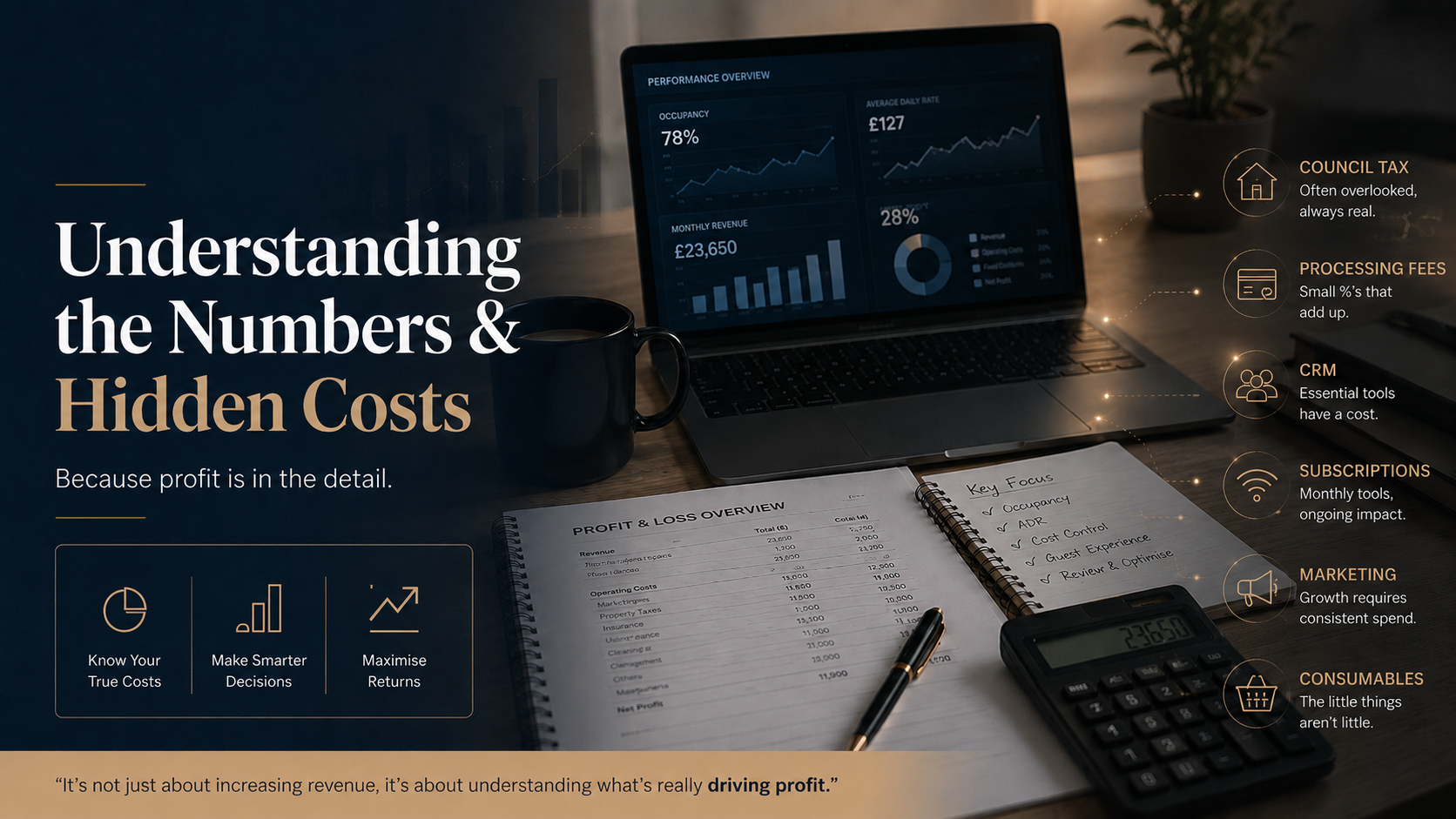
1. Council Tax premiums and property classification
Council Tax will usually be included in the initial figures for a serviced accommodation property. However, the possibility of paying an additional premium can sometimes be missed.
Depending on the property, how it is used and the policy of the relevant local authority, an additional Council Tax premium may apply to certain furnished properties that are not occupied as someone’s main residence.
This could potentially make the Council Tax bill considerably higher than the standard amount shown during the initial research.
Some self-catering properties may eventually qualify for business rates rather than Council Tax. However, this should never be assumed before the property has met the relevant availability and letting requirements.
New operators can sometimes build their financial projections around receiving Small Business Rate Relief without considering what will happen if the property does not qualify.
Before committing to a property, investors should investigate:
- The property’s current Council Tax band.
- The local authority’s policy on furnished or second properties.
- Whether any Council Tax premium could apply.
- Whether the property could qualify for business rates.
- What the cost will be if it does not meet the required letting conditions.
The property’s current Council Tax band.
The local authority’s policy on furnished or second properties.
Whether any Council Tax premium could apply.
Whether the property could qualify for business rates.
What the cost will be if it does not meet the required letting conditions.
The financial assessment should be based on the property’s realistic position rather than the most favourable possible outcome.
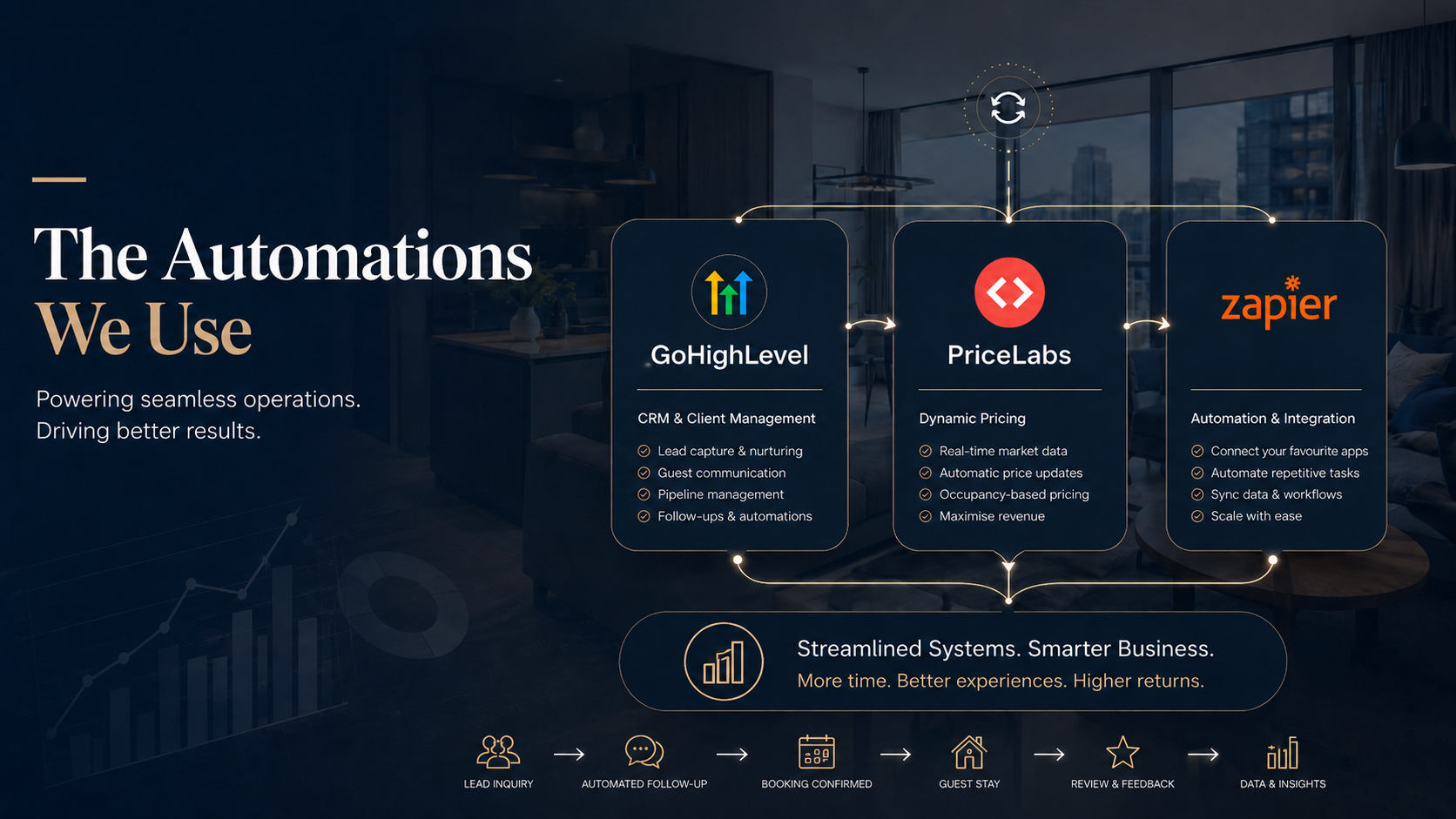
2. Systemisation subscriptions
A single serviced accommodation property may initially be managed using a basic calendar, manual messages and individual booking-platform accounts.
As the business grows, this becomes increasingly difficult.
Operators may begin paying for:
- Property management software.
- Channel-management software.
- Dynamic pricing.
- Automated guest messaging.
- Online check-in systems.
- Smart-lock management.
- Cleaner notifications.
- Automation platforms.
- Financial reporting tools.
Property management software.
Channel-management software.
Dynamic pricing.
Automated guest messaging.
Online check-in systems.
Smart-lock management.
Cleaner notifications.
Automation platforms.
Financial reporting tools.
Each subscription may only cost a relatively small amount when viewed individually.
The problem is that several subscriptions can quickly accumulate into a substantial monthly expense.
An operator might pay for a property management system, a pricing tool, an automation platform and separate software for guest communication. Before long, hundreds of pounds could be leaving the business every month.
These systems are not necessarily unnecessary expenses.
Good systemisation can save time, prevent double bookings, reduce human error and make it possible to operate more properties without becoming overwhelmed.
The important point is that these costs need to be included in the financial projections from the beginning.
If an opportunity only looks profitable when all of the software required to operate it properly is excluded, the property may not have enough margin.
3. Payment-processing fees
Payment-processing fees are one of the easiest serviced accommodation costs to overlook.
Providers such as Stripe and PayPal may be used to collect:
- Direct-booking payments.
- Refundable security deposits.
- Damage-waiver payments.
- Early check-in charges.
- Late-checkout charges.
- Additional guest fees.
- Optional upgrades and extras.
Direct-booking payments.
Refundable security deposits.
Damage-waiver payments.
Early check-in charges.
Late-checkout charges.
Additional guest fees.
Optional upgrades and extras.
The amount charged can depend on the payment provider, the type of card used, where the card was issued and whether currency conversion is required.
For example, when a guest pays a £200 refundable security deposit, the payment-processing cost could be approximately £3.50 to £10 depending on the guest’s card and the circumstances of the transaction.
After the guest checks out, the operator may return the full £200 deposit.
However, the original payment-processing fee may not be returned to the operator.
This means the business has paid to collect and refund money that was never intended to become business income.
Imagine processing ten refundable deposits during one month.
If the average processing cost was £5 per deposit, the business could spend £50 collecting and returning money it was never entitled to keep.
That may not sound significant in isolation. Across an entire year or a growing property portfolio, it becomes a genuine operating expense.
Refundable deposits should not be recorded as income, but any processing fees associated with them should still be recorded as business costs.
Operators should always check the current rates and refund terms offered by their own payment provider because charges can vary between accounts and transactions.
4. Marketing subscriptions
Many serviced accommodation operators want to reduce their dependence on Airbnb, Booking.com and other online travel agencies.
Building a direct-booking channel can be valuable, but direct bookings are not automatically free.
Marketing expenses may include:
- Website hosting.
- Domain renewals.
- Graphic-design software.
- Social media scheduling platforms.
- Email-marketing software.
- Search engine optimisation tools.
- Review-management systems.
- Paid social media advertising.
- Professional photography.
- Video and content creation.
Website hosting.
Domain renewals.
Graphic-design software.
Social media scheduling platforms.
Email-marketing software.
Search engine optimisation tools.
Review-management systems.
Paid social media advertising.
Professional photography.
Video and content creation.
Online travel agencies charge a commission for bringing guests to the property.
When generating direct bookings, the operator takes greater responsibility for attracting, converting and communicating with the guest.
The expense may move away from platform commission and towards marketing, software and advertising.
That does not make direct bookings a poor strategy. It simply means their true cost needs to be understood and measured.
An operator should know:
- How much is being spent on marketing.
- How many enquiries are being generated.
- How many enquiries become confirmed bookings.
- The average cost of acquiring each guest.
- Whether those bookings remain profitable after all other expenses.
How much is being spent on marketing.
How many enquiries are being generated.
How many enquiries become confirmed bookings.
The average cost of acquiring each guest.
Whether those bookings remain profitable after all other expenses.
Creating useful local content can also help potential guests understand why they should visit an area.
Our guide to things to do in Bradford city centre during your stay highlights some of the attractions, venues and nearby destinations that can contribute towards visitor demand in our own operating market.
Marketing should be treated as an investment, but only when the operator understands the results it is producing.
5. CRM subscriptions
A customer relationship management system, commonly known as a CRM, may seem unnecessary when someone first launches a serviced accommodation property.
Airbnb and Booking.com already provide booking details and guest-messaging facilities, so it can appear that everything required is already included.
However, booking platforms do not necessarily manage the entire guest journey or help the operator create an independent database.
A CRM can be used for:
- Direct-booking enquiries.
- Automated emails and text messages.
- Online check-in forms.
- Guest identification.
- Security-deposit collection.
- Early check-in and late-checkout offers.
- Review requests.
- Previous-guest follow-ups.
- Landlord enquiries.
- Investor enquiries.
Direct-booking enquiries.
Automated emails and text messages.
Online check-in forms.
Guest identification.
Security-deposit collection.
Early check-in and late-checkout offers.
Review requests.
Previous-guest follow-ups.
Landlord enquiries.
Investor enquiries.
At Apex Stays, our systems extend beyond the booking platforms because several important processes happen before arrival and after the reservation has been confirmed.
CRM costs may also increase as the number of contacts, features and automations grows.
There may be additional charges for emails, text messages, telephone numbers, workflows and integrations with other software.
Again, this can be money well spent.
A CRM can save time, improve the guest experience and reduce the amount of manual administration required.
The mistake is treating these systems as though they are free when calculating the expected monthly profit.
A properly systemised business may cost more to operate than a single Airbnb listing managed manually, but it may also be more reliable, scalable and easier to control.
6. Consumables
Consumables are the smaller items that need to be replenished regularly.
They are unlikely to be the largest expense in the business, but they can quietly reduce profit because many of them need replacing after almost every stay.
Depending on the standard of accommodation being offered, consumables might include:
- Toilet rolls.
- Bin bags.
- Hand soap.
- Shampoo and body wash.
- Washing-up liquid.
- Cleaning products.
- Tea and coffee.
- Sugar and milk.
- Bottled water.
- Guest refreshments.
- Kitchen roll.
- Sponges and cloths.
- Laundry products.
Toilet rolls.
Bin bags.
Hand soap.
Shampoo and body wash.
Washing-up liquid.
Cleaning products.
Tea and coffee.
Sugar and milk.
Bottled water.
Guest refreshments.
Kitchen roll.
Sponges and cloths.
Laundry products.
At Apex Stays, we provide refreshments and bathroom essentials as part of the guest experience.
The individual cost of a bottle of water, toilet roll or coffee sachet may appear insignificant.
Multiplied across several stays and four apartments, it becomes a genuine monthly business expense.
Operators also need to account for differences in guest behaviour.
Some guests use very little. Others may use or remove everything that has been provided, meaning the full supply needs replacing before the next arrival.
Without a basic stock-control process, operators may over-order, run out of essential items or pay higher prices for emergency purchases.
A realistic consumables allowance should therefore be included within each property’s monthly projections.
Small expenses can create a significant monthly cost
None of these expenses should automatically discourage someone from entering the serviced accommodation industry.
The problem arises when they are excluded from the calculations.
Consider an operator paying every month for:
- A property management system.
- Dynamic pricing software.
- A CRM.
- An automation platform.
- Website hosting.
- Marketing tools.
- Payment-processing charges.
- Consumables.
- A higher-than-expected Council Tax bill.
A property management system.
Dynamic pricing software.
A CRM.
An automation platform.
Website hosting.
Marketing tools.
Payment-processing charges.
Consumables.
A higher-than-expected Council Tax bill.
Each cost may appear manageable on its own.
Combined, they could remove several hundred pounds from the property’s monthly profit.
This becomes even more important as the portfolio grows.
Some expenses increase with each new property. Others increase according to the number of bookings, guests, contacts, messages or transactions being processed.
The right question is not simply:
How much revenue could this property generate?
The better question is:
How much money will realistically remain after every cost required to operate the property properly?
How Apex Stays can help investors understand the real numbers
At Apex Stays, we believe investors should understand the numbers, risks and operating systems behind a serviced accommodation opportunity before committing their money.
Our own operating experience has shown us the importance of looking beyond headline revenue and considering how the property will function after it launches.
When reviewing a potential serviced accommodation opportunity, the areas that may need to be assessed include:
- Expected setup costs.
- Realistic booking income.
- Online travel agency commissions.
- Council Tax or business rates.
- Software and systemisation.
- Cleaning and consumables.
- Payment-processing costs.
- Local competition.
- Visitor demand.
- Management requirements.
- Working-capital needs.
Expected setup costs.
Realistic booking income.
Online travel agency commissions.
Council Tax or business rates.
Software and systemisation.
Cleaning and consumables.
Payment-processing costs.
Local competition.
Visitor demand.
Management requirements.
Working-capital needs.
No serviced accommodation return can be guaranteed.
Occupancy, nightly rates, operating costs and market conditions can all change. Investors should always complete their own due diligence and obtain appropriate professional advice where required.
However, using realistic figures can help determine whether an opportunity has enough margin to deal with quieter periods, changing costs and unexpected problems.
You can learn more about how we assess and support serviced accommodation opportunities across West Yorkshire through the Apex Stays serviced accommodation investor page.
The final takeaway
Serviced accommodation can generate attractive income, but it needs to be treated as a genuine operating business.
Council Tax premiums, systemisation software, payment-processing fees, marketing platforms, CRM subscriptions and consumables may not be the first expenses an investor thinks about.
They still affect the amount of money left at the end of the month.
A strong opportunity should not depend on ignoring these costs to appear profitable.
Operators and investors should use realistic projections, track every expense and maintain enough financial margin to operate the property properly.
Revenue may attract someone to a serviced accommodation opportunity.
Understanding the hidden costs is what helps them decide whether it is genuinely worth pursuing.
To learn more about the accommodation business we currently operate, visit the Apex Stays homepage.
Interested in property opportunities?
Join our WhatsApp Deal Group for direct access to selected property deals, operator insights and serviced accommodation breakdowns across West Yorkshire.